Backreaming
Condition While you Drill. Minimize or Eliminate Backreaming.
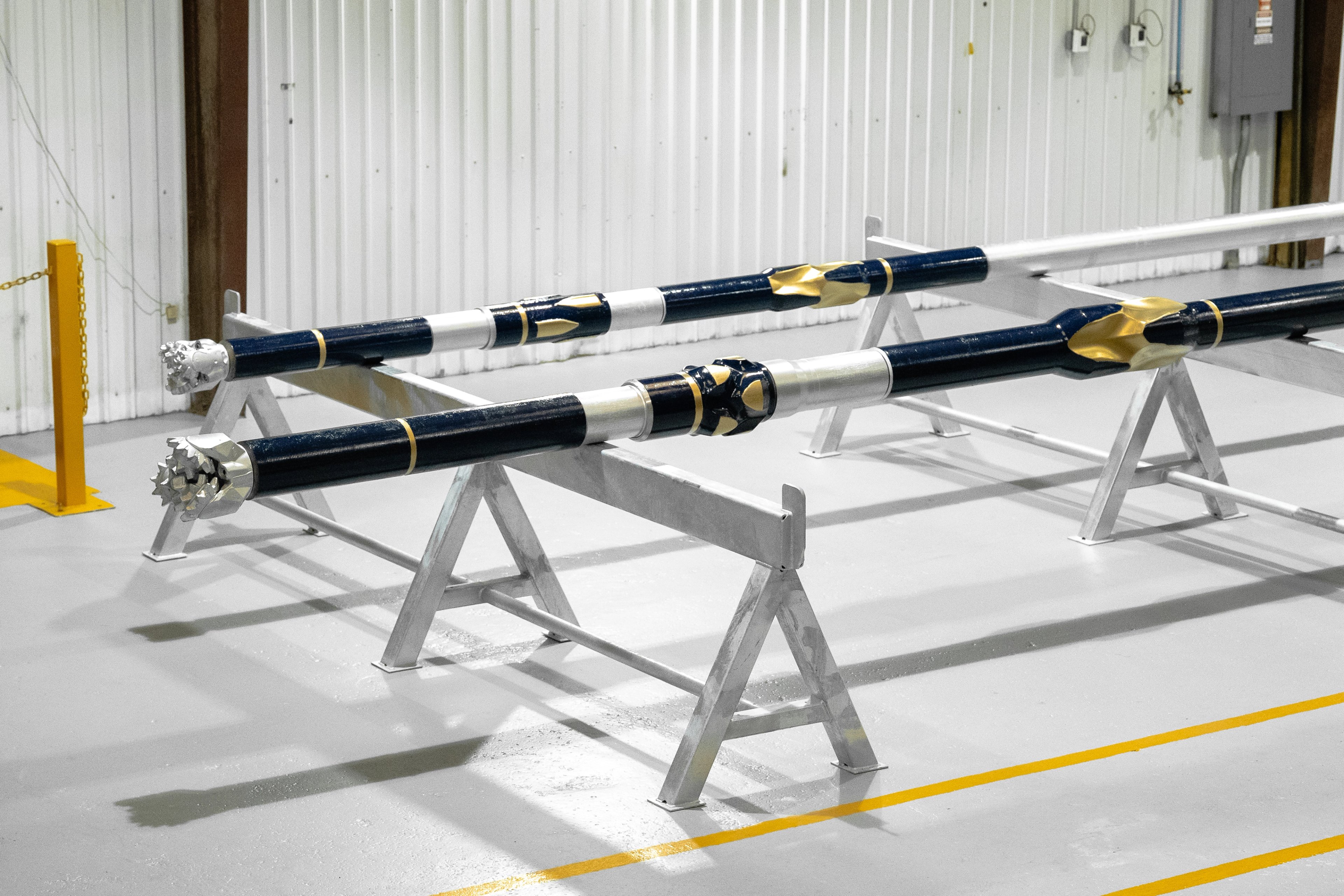
Bent-housing motors and rotary steerable systems (RSS) can leave a spiraled, tortuous wellbore. Tight spots and hang-ups cost hours of backreaming, putting RSS and MWD tools at risk, and making casing harder to run. DTI's Drill-N-Ream® conditions the hole while you drill, so you trip out clean and get casing to bottom.
Challenge
A spiraled wellbore does not slow you down while you drill. The cost comes when you pull the BHA out and again when you run casing in.
Ledges and tight spots get expensive when you trip, forcing you to alter the trip routine and clear the obstructions.
Costs You Rig Time
Every procedure clearing a tight spot or dogleg adds cost to the well.
Risks your String
Stripping through ledges raises your odds of stuck pipe, BHA hang-ups and premature wear on drill string and casing.
Compounds with Depth
The deeper and more deviated your well, the bigger the penalty. Every hour backreaming is an hour not drilling ahead.
Root Causes
Addressing the Root Causes
Backreaming is a response to a symptom encountered downhole. The hours you lose on the way out trace back to conditions created while drilling. DTI targets those conditions at the source, so the hole you drill is the hole you trip out of.
Spiraling and Tortuosity
Spiraling hole patterns and micro-doglegs cut while drilling reduce your effective hole diameter. The bit and BHA can drill ahead, but on the way out of the hole they hang up, and running casing becomes more difficult too.
Ledges and Tight Spots
Formation transitions and borehole upsets leave ledges and undergauge intervals that catch your string on the trip out.
Balling and Packing Off
Cuttings pack around conventional stabilizers in reactive formations, choking hole cleaning and turning your trip into a fight.
Filter Cake Growth
Thick filter cake narrows your effective wellbore over time, creating tight spots that were not there when you drilled.
Vibration and Drilling Dysfunctions (Whirl, Stick-Slip)
Conventional stabilizers on modern high-speed BHAs can create a tortuous wellbore. Higher RPM amplifies lateral vibration and forward whirl, driving the BHA against the borehole wall at pinch points while leaving the rest of the string free to whirl. Wall contact at these points generates torsional oscillations, causing torque fluctuations and RPM swings along the string that can escalate into stick-slip. As drilling rates continue to rise, stabilization must improve to keep the BHA centralized, the torque steady, and the hole in gauge
Solutions
Eliminate Backreaming with DTI Wellbore Conditioning Tools
Drill-N-Ream®
Ultimate Wellbore Conditioning Tool
Reduce torque and drag, extend your lateral reach, and eliminate the need for dedicated reamer runs.
Dome Hybrid Reamer
Stabilize & Ream on Demand
A dual-function tool that stabilizes the BHA during normal drilling and reams on demand, reaming when you need it.
ClearPath™ Stabilizer
Next-Generation Stabilization
Dome-shaped, low-friction blades centralize the BHA while reducing torque, drag, and torsional vibration, a direct spiral-blade replacement.
ClearPath™ Sleeve
Wellbore Conditioning Sleeve
A non-rotating stabilizer sleeve that delivers 360° wellbore contact, reducing torque, drag, and vibration while supporting higher ROP.